

Hi, today we’re diving into how the market punishes companies for reputational scandals and why choosing the right partners is everything.
Despite the differences in these cases, they share one glaring flaw: a total lack of a strong crisis management strategy.
The Novo Nordisk Soap Opera: A Masterclass in Strategic Inconsistency
How does a company that created a cultural phenomenon like Ozempic see its market cap plummet fourfold from its peak in June 2024? While most point to market conditions, evolving regulations, and new drug trials, a closer look reveals a man-made PR crisis. The issue isn’t just the product; it’s the erratic strategy that has turned professional distribution into a daytime soap opera
The Hims & Hers Saga: A Timeline of Confusion
The relationship between Novo Nordisk and Hims & Hers (HIMS) is the perfect example of how not to manage strategic alliances.
April 2025: A high-profile partnership is announced.
June 2025: Just two months later, Novo abruptly terminates the deal. Reuters reports a “war of words,” with HIMS accusing Novo of bullying and undue pressure.
February 2026: HIMS strikes back, launching a $49 compounded alternative to Wegovy. Novo responds with a massive patent infringement lawsuit.
March 9, 2026: In a stunning reversal, they “make up” again to sell obesity drugs together.
Mixed Signals and Market Anxiety. What does this tell the stakeholders? It screams that Novo Nordisk has lost control over its distribution channels. When a global leader flips from “strategic partner” to “legal executioner” and back to “partner” in less than a year, it sends a wave of uncertainty through the market. Consistency is the bedrock of big pharma. If you decide to go to war to protect your intellectual property, you go all the way. If you decide to embrace the telehealth revolution, you commit. Doing both simultaneously makes the company look reactive rather than proactive.
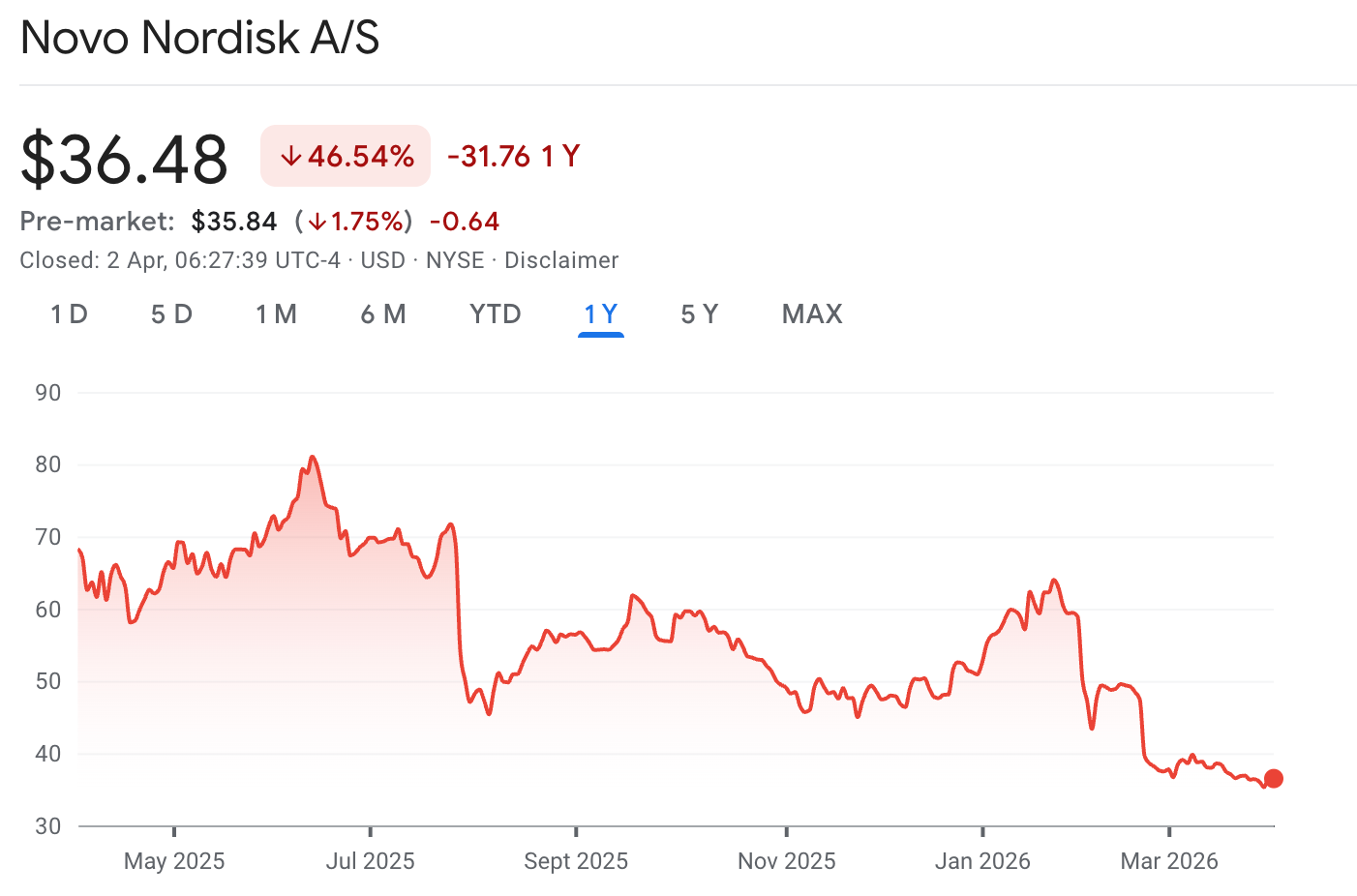
The “Eli Lilly” Contrast. Look at their closest rival, Eli Lilly. They faced the exact same challenges with compounders and patent trolls, yet they managed to avoid the public scandals and the messy “breakup-to-makeup” headlines. The result? Their stock price reflected market confidence, while Novo’s narrative crumbled. While drug efficacy is the engine, reputation is the steering wheel and right now, Novo is driving in circles.

The PR Vacuum. Perhaps the most telling detail is the lack of crisis management. In major Reuters reports where HIMS CEO was openly accusing Novo of pressure, Novo’s side was conspicuously absent “No comment.”
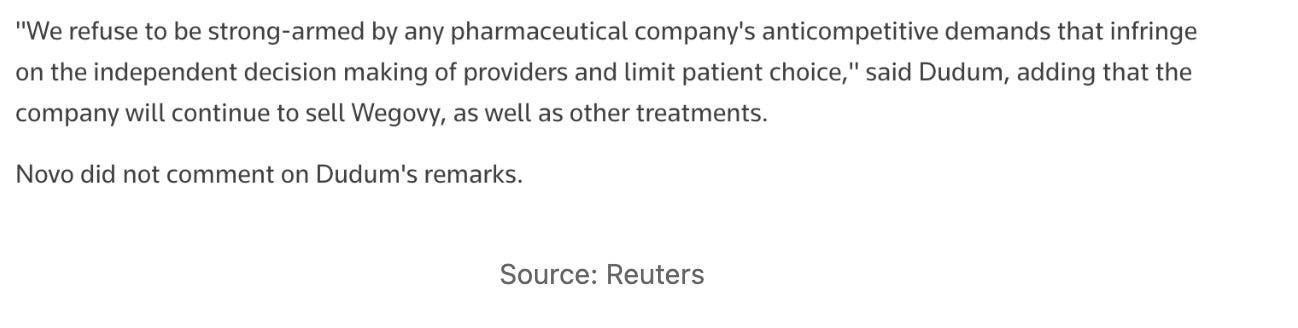
If you’re a multi-billion dollar entity picking a fight, you don’t leave the floor to your opponent. A “no comment” in the middle of a public feud isn’t “staying above the fray” - it’s a total absence of a crisis strategy.
In Big Pharma, you can’t have it both ways. You either play the “Fortress” and defend your IP with consistent, unwavering legal force from day one, or you lean into the new ecosystem and build stable, long-term alliances. Trying to do both is exactly how you lose a massive chunk of your valuation. This strategic flip-flopping isn’t just a PR hiccup; it’s a red flag that leadership lacks a unified vision. If you’re going to pick a fight, finish it. If you’re going to partner up, stand by it. Anything in between is just expensive noise.
But Novo Nordisk isn’t the only giant fumbling its narrative. If you want to see what happens when a company ignores systemic “red flags” until they explode, look at Super Micro Computer (SMCI).
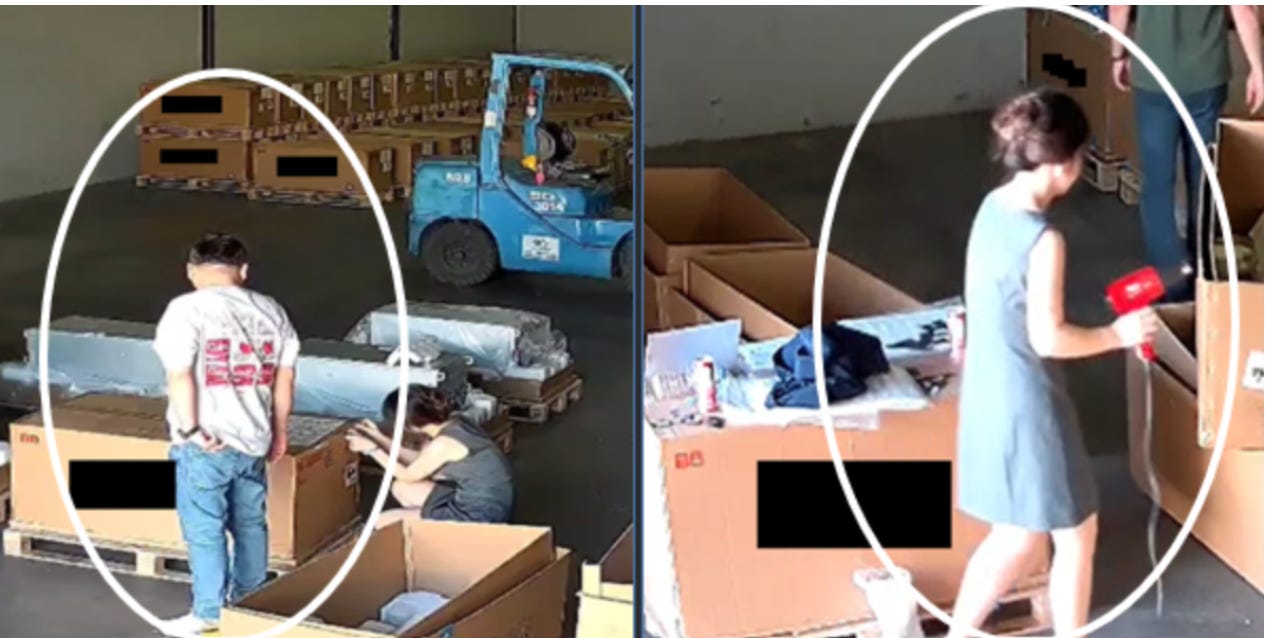
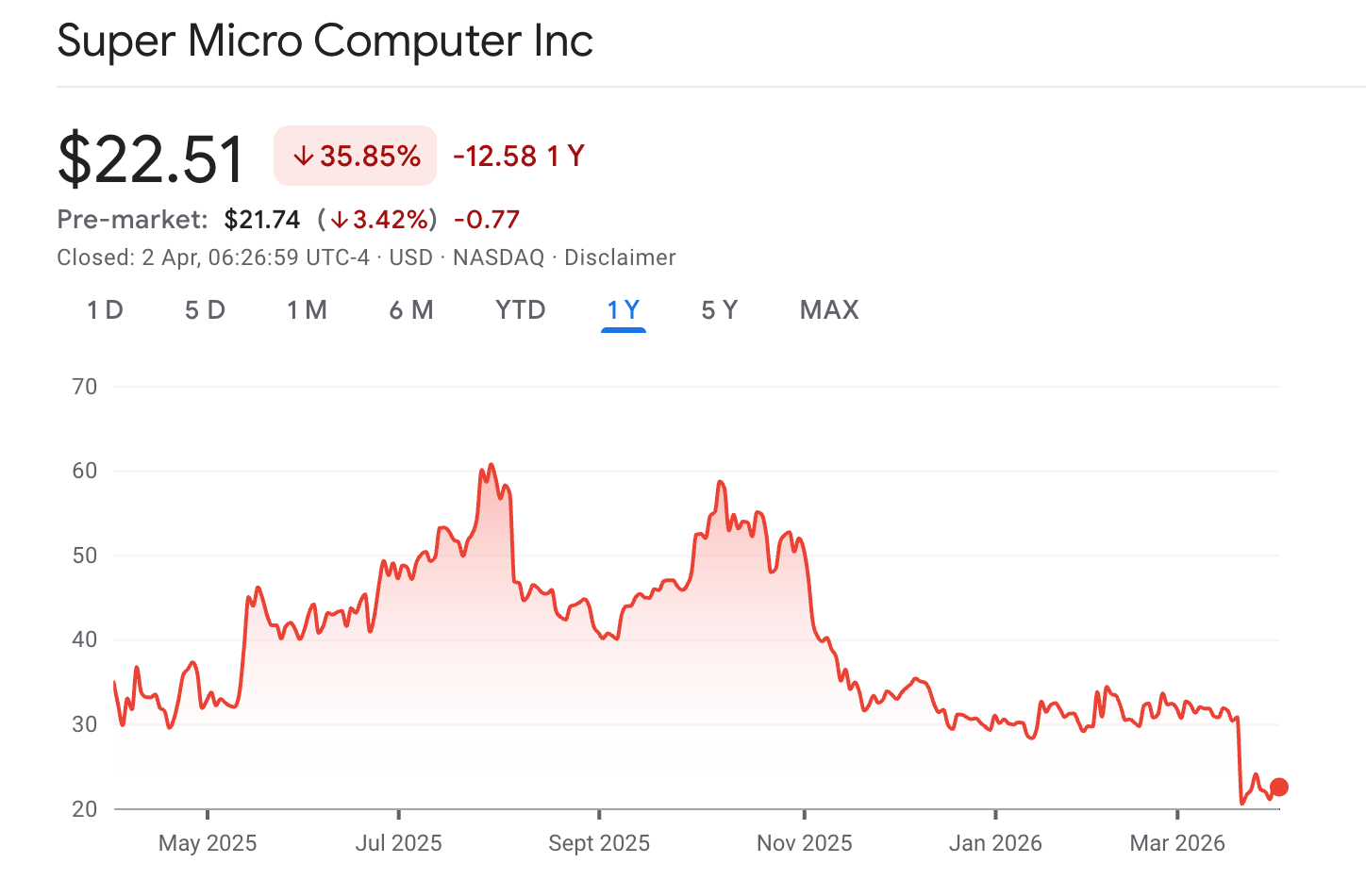
Just last week the US Department of Justice unsealed a massive indictment against SMCI’s co-founder, Wally Liaw, and other top executives. The charge? A sophisticated $2.5 billion scheme to smuggle restricted NVIDIA AI chips (including the high-end Blackwell and Hopper series) to China using “dummy” servers and hair dryers to swap serial numbers. The stock fell 33% after this news.
The Pattern of Toxicity For seasoned investors, the SMCI collapse wasn’t a “black swan” event, it was a predictable train wreck. It’s worth looking at the chronology, which has been surprisingly packed with events. As one of the standout phenomena of the AI trade, fueled by its deep partnership with NVIDIA, the stock consistently bounced off local lows, often propped up by fresh “Buy” ratings from analysts who ignored the rot underneath.
The Hindenburg Signal: In August 2024, Hindenburg Research exposed “accounting manipulation” and sanctions evasion
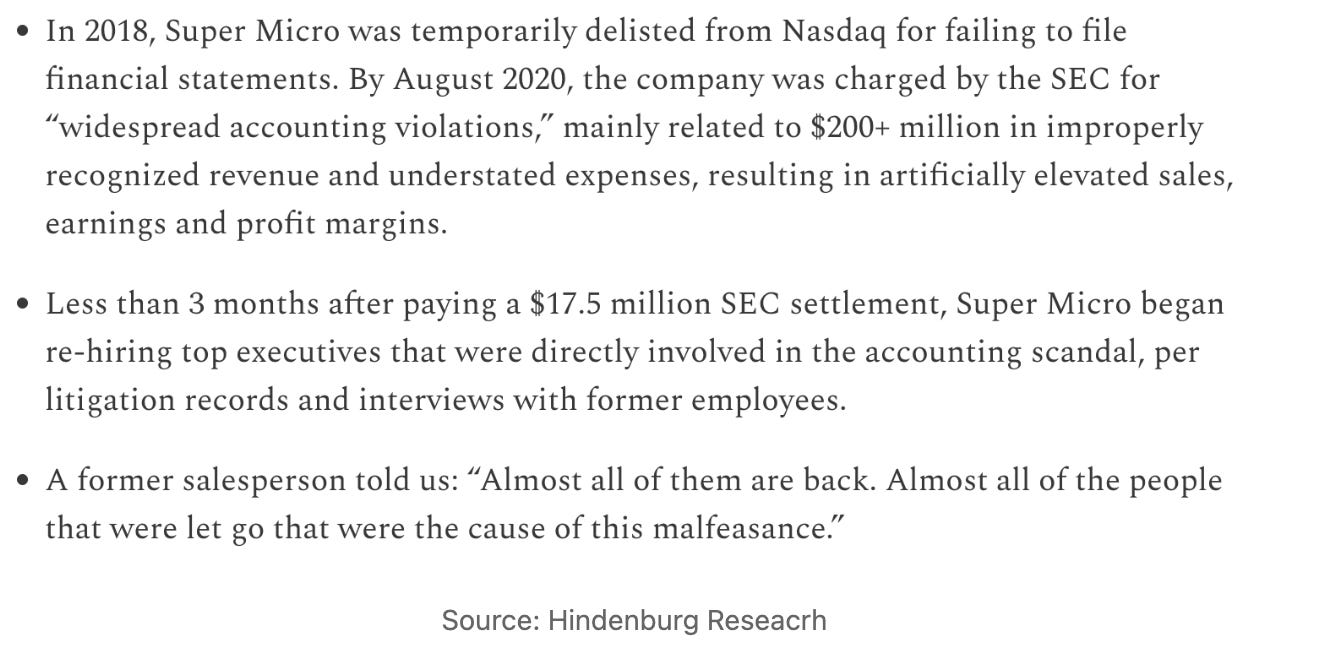
The Smoking Gun: Shortly after, also in August, 2024, SMCI did the unthinkable, they delayed their annual 10-K report. In the world of finance, a delayed annual report is the ultimate warning sign.
September 2024: The DOJ Enters the Room Following the Hindenburg report, the situation moved from “short-seller allegations” to a federal reality. On September 26, 2024, reports surfaced that the U.S. Department of Justice (DOJ) had officially opened a probe into Super Micro. The investigation was in its initial phases, but the stock still plummeted 12% in a single afternoon. Investors realized this wasn’t just a PR headache, it was a formal inquiry by federal prosecutors.
October 2024: The Auditor’s Exit Strategy If the DOJ probe was a warning shot, October was the knockout blow. Ernst & Young , the company’s auditor, didn’t just resign, they issued a statement that should have sent every investor running for the exits. EY stated they were resigning due to information that led them to “no longer be able to rely on management’s and the Audit Committee’s representations” and were “unwilling to be associated with the financial statements prepared by management.”
The “Short Memory” Trap
The market has a notoriously short memory. Investors are quick to forget negative signals, especially when a stock that hit $20 looks like it could bounce back to $50, showing enviable strength. And why wouldn’t it? Very few companies have the privilege of selling NVIDIA servers, and Jensen Huang hasn’t officially turned his back on his partner. To my knowledge, Huang himself has remained silent on these allegations, letting the hardware do the talking.
But did SMCI actually try to flip the narrative? Not really. Beyond a few sparse, robotic official statements, there was no real crisis management. It seems the leadership decided that analyst upgrades and “Buy” ratings would do the heavy lifting for them.
This is a fatal mistake.
Reputation is a Leading Indicator
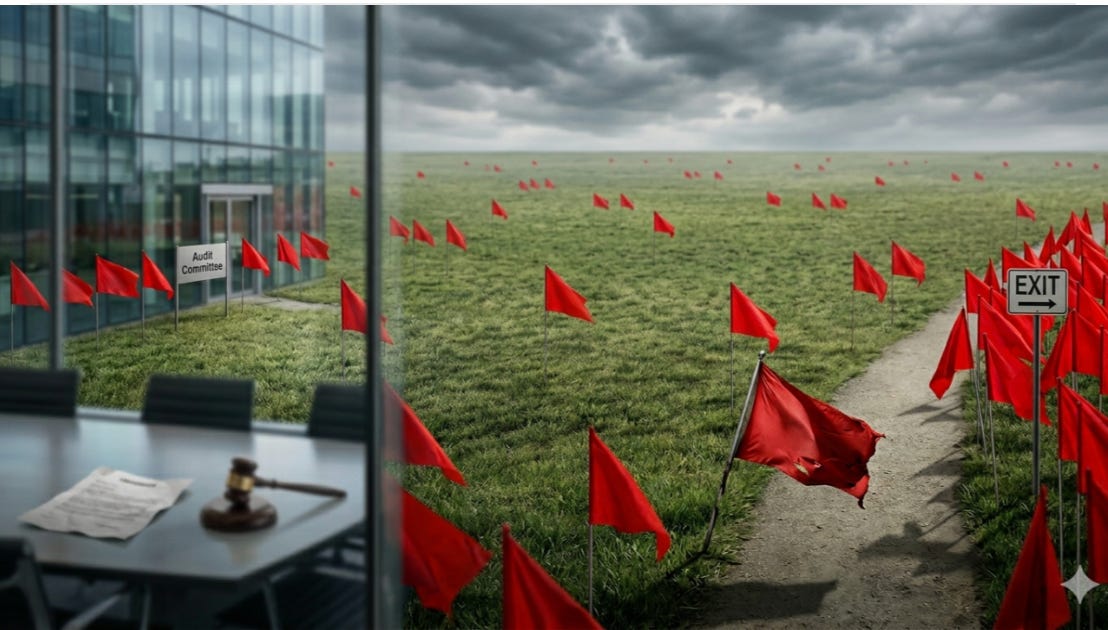
You cannot look at the numbers in a vacuum; you must look at the company’s reputation. When you see a field littered with red flags, you don’t keep running, you stop. The stock market is risky enough as it is. Taking on reputational risk on top of market volatility is simply unnecessary. The issue isn’t just the mountain of negativity, it’s the fact that the company made zero effort to fix it. Every company will eventually face a crisis; the only question is how they navigate it.
My advice is always the same: Have a crisis consultant in your corner before the storm hits. Because when the indictment is unsealed or the auditor resigns, it’s already too late to start looking for a parachute.
I promised to break down real-world cases, and I’m doing just that. Subscribe to my newsletter, and we’ll continue discussing not just how these disasters happen, but how to fix them before they burn everything down.
This analysis is for informational purposes only and does not constitute financial or legal advice.
As always, your writing reveal one critical reality: that companies don't always care about their reputation. At least this is the conclusion I draw from this scenario. Wether its the fault of internal teams, over inflated PR agencias or management themselves, that's hard to tell. But someone is definitely not taking the right precautions when it comes to reputation.